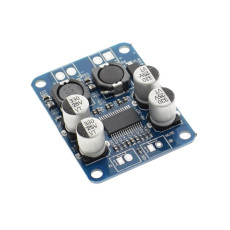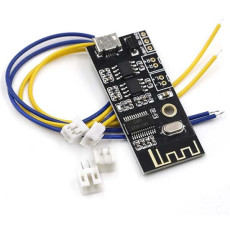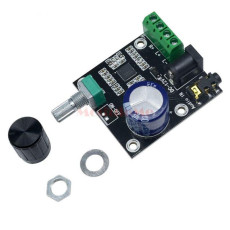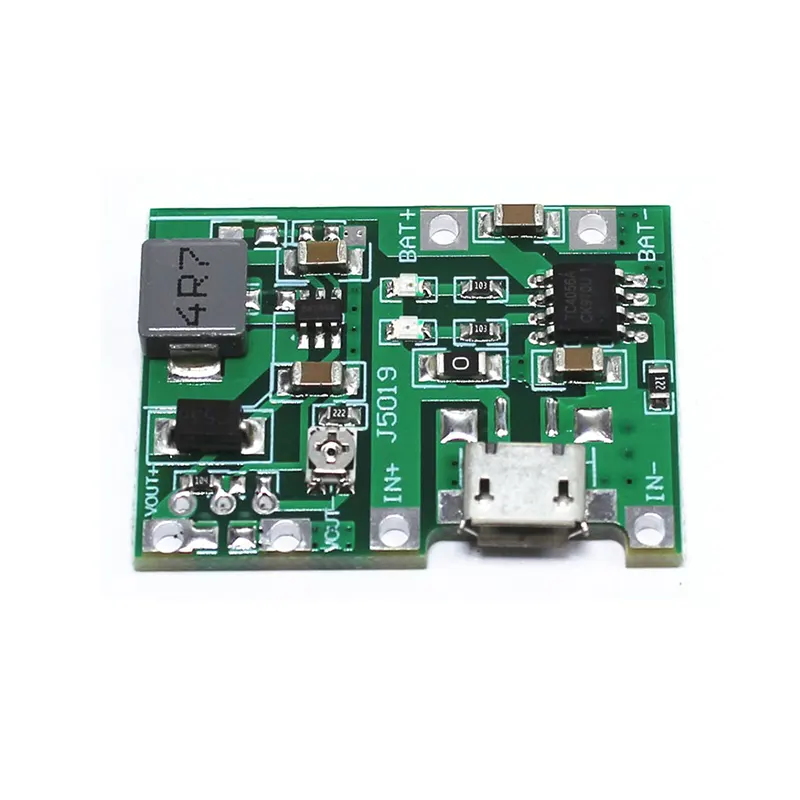
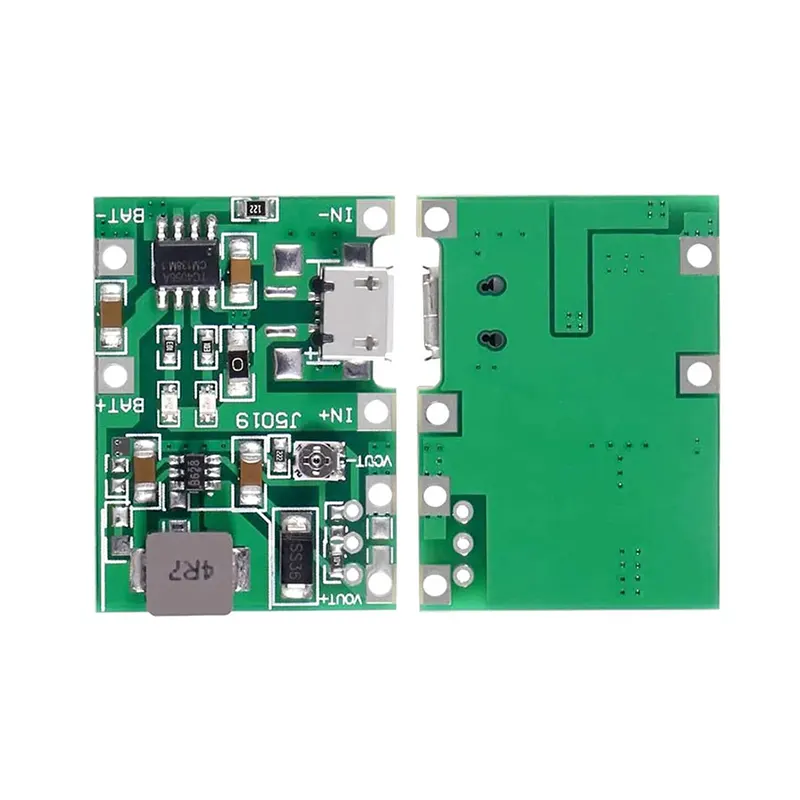
Create your own mini UPS or portable power pack with the J5019 HW-357 Boost & Charging Module, available now at the best price in Bangladesh from Electrapac. This versatile board is a "two-in-one" powerhouse, combining a lithium battery charging circuit (similar to the TP4056) with an integrated adjustable boost converter. It is the go-to solution in BD for powering 9V or 12V routers and ONUs directly from a single 3.7V 18650 battery during load shedding. Read more
The J5019 (HW-357) UPS Boost & Charger Module is a versatile "all-in-one" power management solution.
The J5019 combines two essential functions on a single tiny PCB: a Lithium Battery Charger (TP4056-based) and a DC-DC Step-Up Converter.
Instant UPS Function: Perfect for "Always-On" devices. It manages the transition between USB power and battery power seamlessly.
Wide Output Range: Use the precision trimpot to dial in common voltages like 5V, 9V, 12V, or even 24V from a single 3.7V cell.
Multi-Battery Support: While optimized for 18650 Lithium cells, it can also charge and boost power from AA or AAA rechargeable battery packs (as long as they are 3.7V lithium-based).
Dual Protection: Includes built-in charging protection to prevent overcharging your lithium batteries.
Compact Integration: Eliminates the need for two separate boards (charger + booster), saving space in your enclosure.
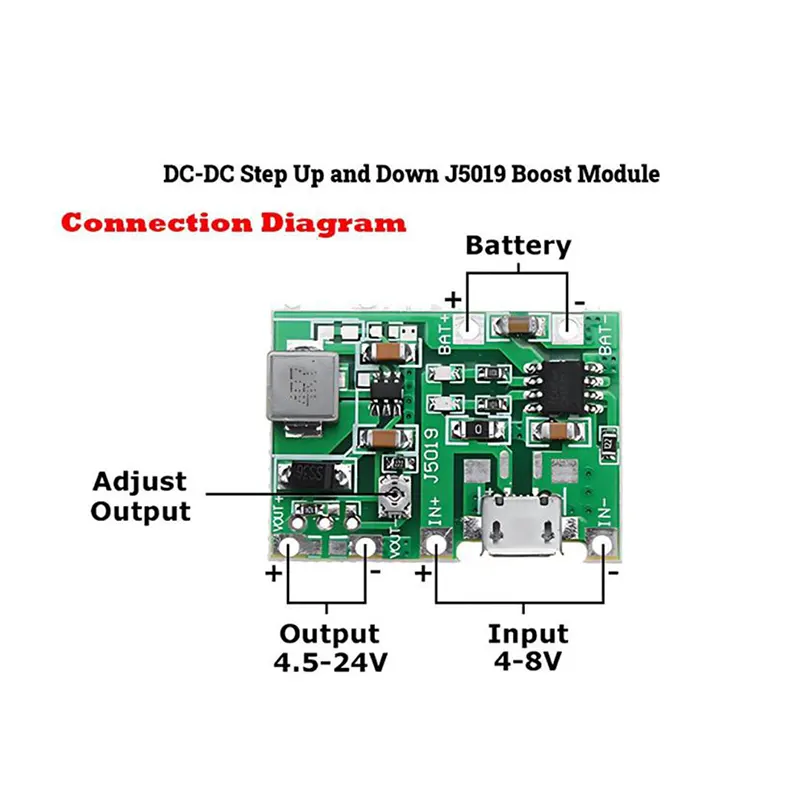
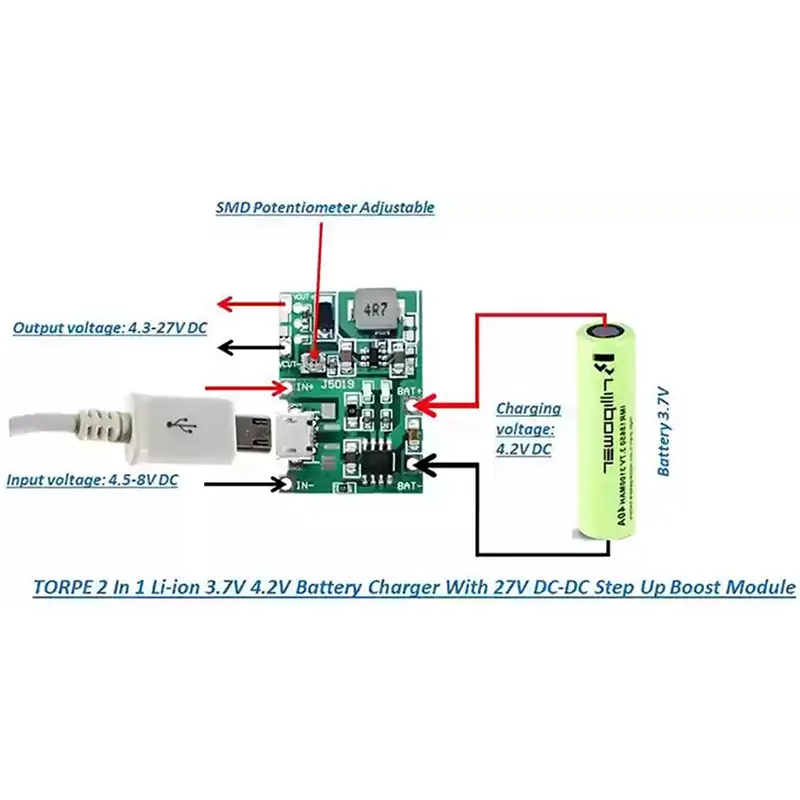
To build a mini-UPS with your Electrapac module, follow these connection points:
Input (VIN+ / VIN-): Connect your 5V USB source or power adapter here.
Battery (BAT+ / BAT-): Connect your 3.7V Lithium battery (an 18650 cell).
Output (VOUT+ / VOUT-): Connect your load (the device you want to power).
Voltage Adjustment: Before connecting your load, use a multimeter on the VOUT pins and turn the potentiometer until you reach your target voltage (12V).
Pro Tip: To calculate the maximum output current, use the formula P = V x I. At 12V, you can typically draw about 0.5A to 0.7A} safely without overheating the module.
Mini UPS for Routers: Keep your Wi-Fi running during power outages by boosting a 3.7V battery to 9V or 12V.
Portable Multimeters: Upgrading old 9V battery-operated tools to rechargeable lithium power.
CCTV Backup: Ensuring security cameras stay active even if the main power lines are cut.
Arduino/ESP32 Projects: Providing a stable 5V or 9V rail for long-term remote sensors.
LED Emergency Lighting: Driving 12V LED strips from a rechargeable battery source.
We source the J5019 / HW-357 with high-quality inductors to ensure the boost conversion is efficient and generates minimal heat. At
| Specifications | Descriptions |
|---|---|
| Input voltage | 4.5-8V |
| Output voltage | continuous adjustable 4.3-27V (Counter clockwise to boost voltage) |
| Charging voltage | 4.2V |
| Charging current | up to 1A |
| Discharge current | the maximum 2A |
| Output reference maximum current | 5V 1.4A, 9V 0.8A, 12V 0.6A |
| Quiescent current | about 0.5 mA |
| Overshoot protection | Yes |
| Over discharge protection | None (also can be said yes, because 2V cut-off boost but does not block the output, output has 2V) |
| Deadline boost | 2V, depending on whether added the additional protection board |
| Size | 3.3 x 2.3 x 0.9cm |
| Connecting example | VIN + connect 5V solar panel, BAT + terminal can output 4.2V to charging 3.7V 18650 battery, OUT + side can output an adjustable voltage |
| Package Contents | 1 x J5019 Power Circuit |

Subscribe to our newsletter and get early access to new arrivals, tech trends, and exclusive unboxing reviews from Electrapac.?