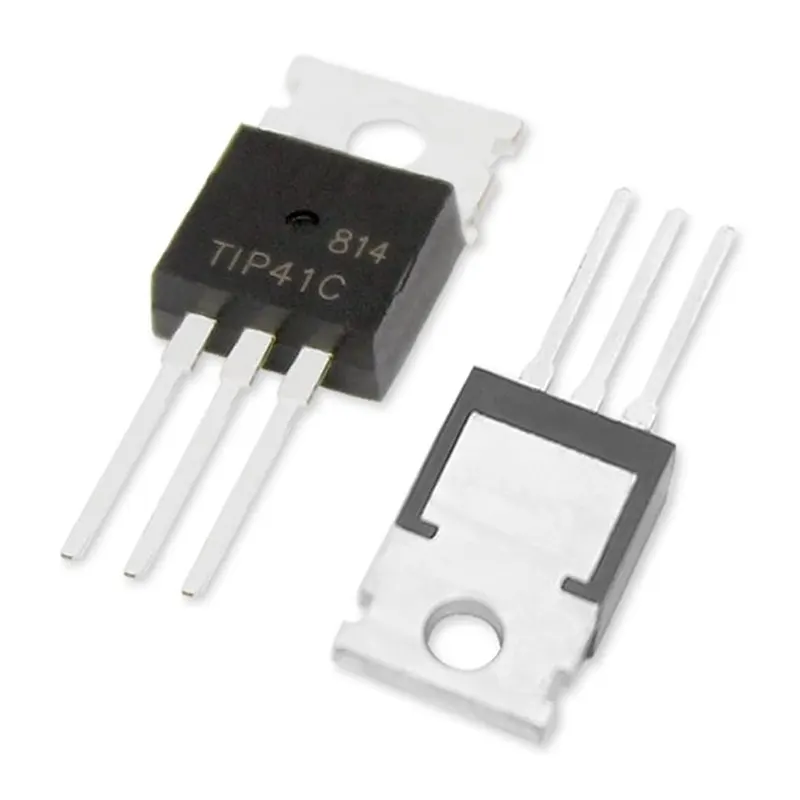
The TIP41C is a versatile Bipolar NPN Power Transistor designed for general-purpose switching and linear amplification. Known for its ruggedness and high voltage tolerance, it is a go-to component for engineers and hobbyists building power stages for audio equipment and motor controllers. Read more
The TIP41C Bipolar NPN Power Transistor is a legendary workhorse in the world of linear power electronics. At Electrapac, we recommend this transistor as an essential component for any hobbyist or repair technician due to its robustness and ease of use in medium-power amplification and switching circuits.
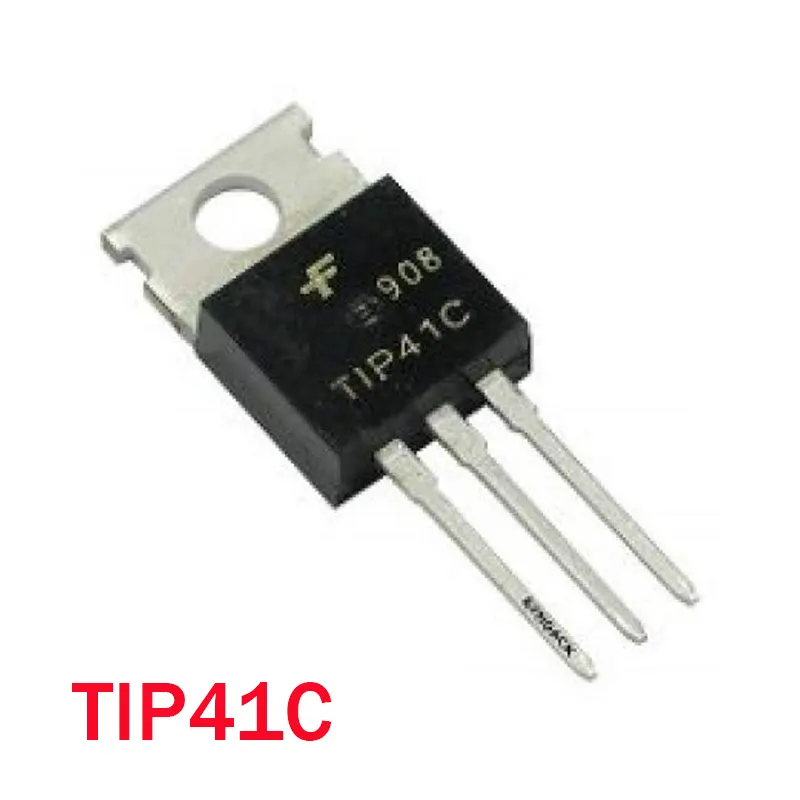
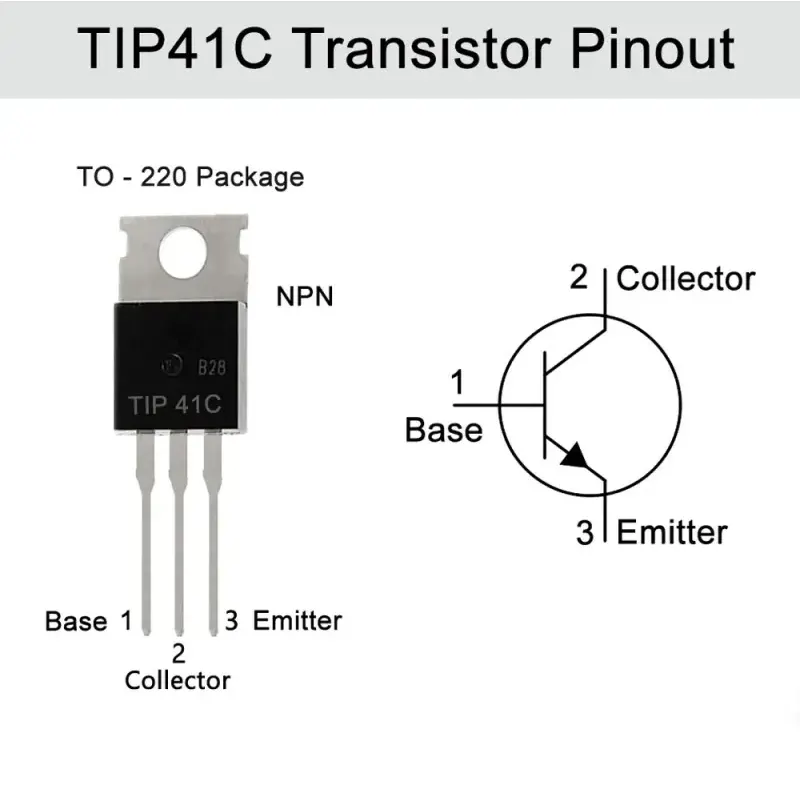
The TIP41C is a silicon NPN transistor housed in the widely used TO-220 package.
100V Breakdown Voltage: The "C" suffix denotes the highest voltage rating in the TIP41 family, making it safe for circuits operating at 12V, 24V, or even 48V.
High Current Capability: Capable of handling a continuous 6A, allowing it to drive heavy loads that would destroy smaller signal transistors like the BC547.
Excellent Linearity: Provides consistent performance across its frequency range, which is critical for high-fidelity audio applications.
Rugged TO-220 Case: The metal tab is internally connected to the Collector, allowing you to bolt it directly to a heatsink for effective thermal management.
Easy Prototyping: The large, sturdy leads fit perfectly into breadboards and perforated prototype boards.
To ensure your Electrapac project runs reliably, follow these professional integration tips:
Base Resistor is Vital: Unlike MOSFETs, BJTs are current-driven.
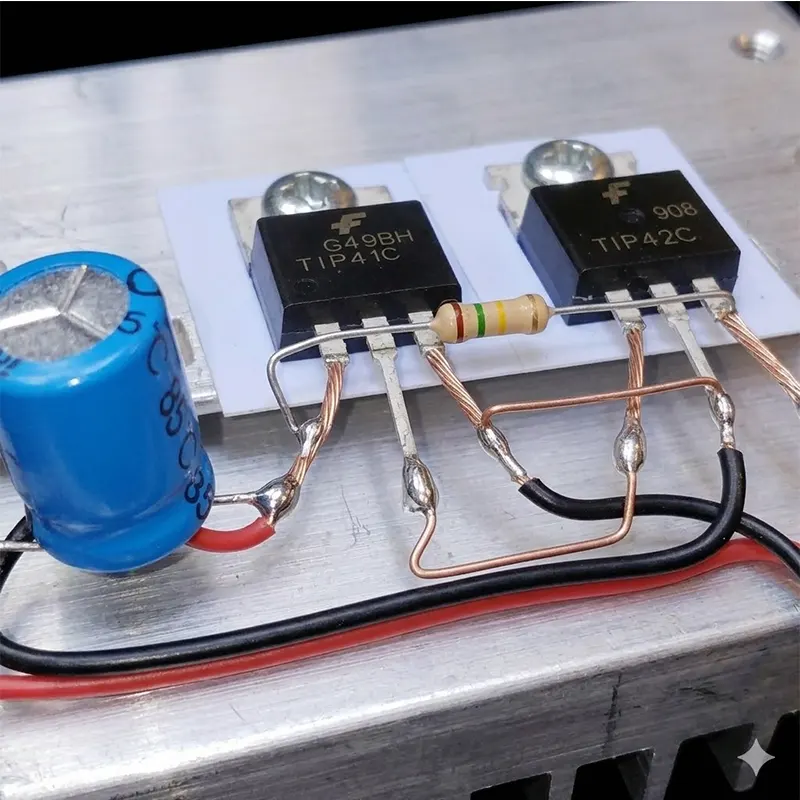
Heat Dissipation: If you are drawing more than 1A or dissipating more than 2W, the TIP41C will get hot. Attach an aluminum heatsink to the metal tab to prevent thermal failure.
Saturation Voltage: Keep in mind that the TIP41C has a Collector-Emitter Saturation Voltage (V_CE(sat)) of about 1.5Vu. This means there will be a small voltage drop and heat generation when the transistor is fully "ON."
Complementary Pairing: For "Push-Pull" audio amplifiers, pair the TIP41C (NPN) with the TIP42C (PNP) for symmetrical signal amplification.
DC Motor Control: Reliable switching and speed control for small to medium DC motors.
Audio Power Amplifiers: Used in the output stages of home stereo systems and guitar amps.
Linear Voltage Regulators: Building custom adjustable power supplies.
Relay & Solenoid Drivers: Safely switching high-power mechanical components from low-power logic.
High-Power LED Switching: Controlling large arrays of LEDs for architectural or emergency lighting.
At Electrapac, we ensure our TIP41C transistors are genuine Grade-A components that meet the full 100V 6A specification. Visit us at for the dependable semiconductors that serve as the building blocks for your creative electronics.
| Specifications | Descriptions |
|---|---|
| Transistor Polarity | NPN |
| Package Type | TO-220 |
| Collector-Base Voltage ($V_{cbo}$) | 100V |
| Emitter-Base Voltage ($V_{ebo}$) | 5V |
| Continuous Collector Current ($I_c$) | 6A |
| Peak Collector Current ($I_{cm}$) | 10A |
| Base Current ($I_b$)2A | |
| Total Power Dissipation ($P_d$) | 65W |
| Transition Frequency ($f_T$) | 3.0 MHz |
| Operating Junction Temp ($T_j$) | -65°C to +150°C |
| Package | 1x TIP41C Bipolar NPN Transistor |

Subscribe to our newsletter and get early access to new arrivals, tech trends, and exclusive unboxing reviews from Electrapac.?