


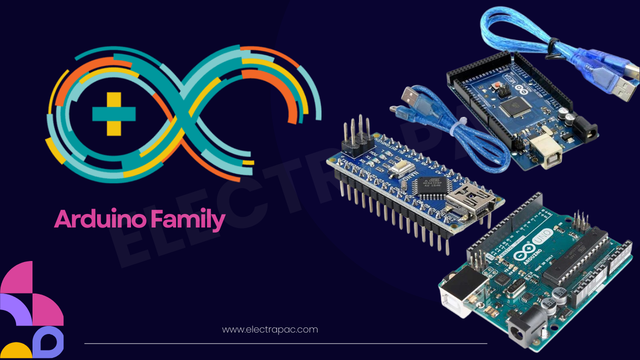
Arduino Core Family UNO, Nano, Mega, and Pro Mini Overview
Arduino UNO R3: The Industry Standard
The Arduino UNO is the most documented and used board in the world. It is the perfect entry point for anyone starting with electronics.
Design: It features a robust "Shield" footprint, allowing you to stack expansion boards (like Motor Shields or Ethernet Shields) directly on top.
Durability: The ATmega328P chip is often socketed, meaning if you accidentally "fry" the chip, you can replace the IC without replacing the whole board.
Best Use Case: Classroom learning, basic home automation, and rapid prototyping where space is not an issue.
Arduino Nano: Compact Versatility
The Arduino Nano offers the same processing power as the UNO but in a tiny, breadboard-friendly package.
Connectivity: It uses a Mini-B or Micro-USB cable (depending on the version) and plugs directly into a breadboard for easy wiring without jumper wires.
Extra Inputs: Surprisingly, the Nano has 8 analog pins, two more than the UNO, making it better for sensor-heavy small projects.
Best Use Case: Small robots, handheld devices, and breadboard prototyping.
Arduino Mega 2560: The Heavyweight
When your project grows too large for a standard board, the Arduino Mega takes over. It is designed for complexity.
Massive I/O: With 54 digital pins and 16 analog inputs, you can control dozens of LEDs, sensors, and motors simultaneously.
More Memory: It has 256KB of Flash memory—8 times more than the UNO—allowing for much larger and more complex code.
Communication: It features 4 hardware serial ports (UART), allowing it to talk to multiple devices (like a GPS, Bluetooth module, and Nextion display) at the same time.
Best Use Case: 3D printers (RAMPS), CNC machines, and complex robotics.
Arduino Pro Mini: The Minimalist
The Pro Mini is the "stripped-down" version of the Arduino. To keep it as small and light as possible, it removes the USB-to-Serial hardware.
Programming: You need an external FTDI or USB-to-TTL programmer to upload code.
Power Efficiency: Because it lacks the USB chip, it consumes very little power, making it ideal for battery-operated devices.
Two Versions: It comes in 5V (16MHz) for power and 3.3V (8MHz) for low-power/safe interfacing with modern sensors.
Best Use Case: Permanent installations, wearables, and long-term battery-powered sensor nodes.