






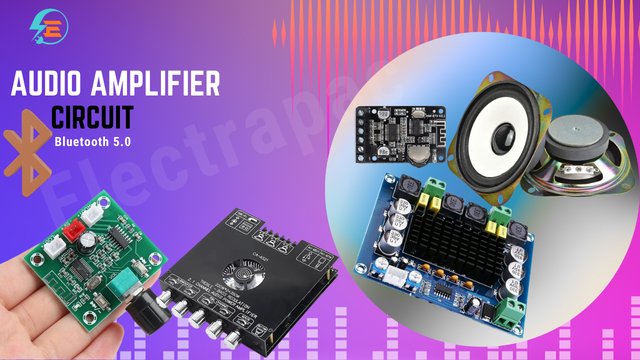
Audio Amplifier Circuit Family XY-P15W/ XH-M543/ XH-A150/ CT14/ XH-A158/ HW-770/ CA-AS21/ CA-6928/ CA-TB21/ CA-6953/ PAM8610 & MH-M38 Audio Amplifier Circuit
Simple Products Details
The Bluetooth Receiver Modules
The AS21 and TB21 are actually specific models
of pre-assembled amplifier boards (usually from the brand Wuzhi Audio) rather
than just raw chips.
- ZK-AS21:
This is a powerhouse for 2.1 systems.
- Channels:
2.1 (Left + Right + Subwoofer).
- Power:
Usually around 220W total ($50\text{W} \times 2$ for highs + $100\text{W}$
for the sub).
- Best
for: A "Boombox" setup where you want dedicated bass.
- ZK-TB21:
The "little brother" to the AS21.
- Channels:
2.1.
- Power:
Around 150W total ($50\text{W} \times 2 + 100\text{W}$). It uses the TPA3116D2
chip, which is legendary for being efficient and clean.
The A158 (PAM8403)
The A158 usually refers to a specific
small-form-factor board using the PAM8403 chip.
- Type:
Class D Digital Amplifier.
- Power:
$3\text{W} + 3\text{W}$.
- Voltage:
Runs on 5V (perfect for USB power or a single Lithium battery).
- Best
for: Ultra-portable projects or desktop "fidget" speakers.
The 3-inch Speaker Factor
A 3-inch driver is a "sweet spot" size. It’s large
enough to move some air for decent sound but small enough to keep the enclosure
portable.
- For
AS21/TB21: You would use two 3-inch speakers for your Mid/Highs and a
larger 4 or 5-inch speaker for the Subwoofer channel.
- For
A158: A 3-inch full-range speaker is perfect. Since the A158 only puts
out 3W, look for a speaker with high sensitivity so it sounds
louder with less power.
Comparison Table
|
Component |
Power Output |
Ideal Voltage |
Best Use Case |
|
A158 (PAM8403) |
3W + 3W |
5V |
Small portable DIY |
|
TB21 |
50W x2 + 100W |
12V - 24V |
Medium Bookshelf / Boombox |
|
AS21 |
50W x2 + 160W+ |
15V - 36V |
High-power DIY Audio |
Quick Tips for Your Build:
- Power
Supply is Key: If you use a TB21 or AS21, don't skimp on the power
brick. A 24V 5A supply will make a world of difference in bass punch
compared to a 12V supply.
- Enclosure:
Even the best 3-inch speaker will sound "thin" without a box.
Use MDF or thick plastic and seal the edges to prevent air leaks.
- Ground
Loop: If you hear a "hum" or "buzzing" when
Bluetooth is connected, it’s often a ground loop. Using a dedicated
isolated power module for the Bluetooth side can fix this.
Tags :
Audio,
Amplifier circuit