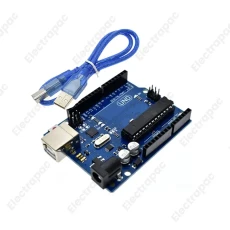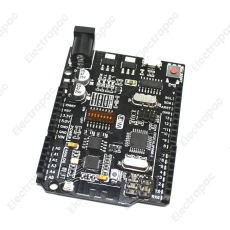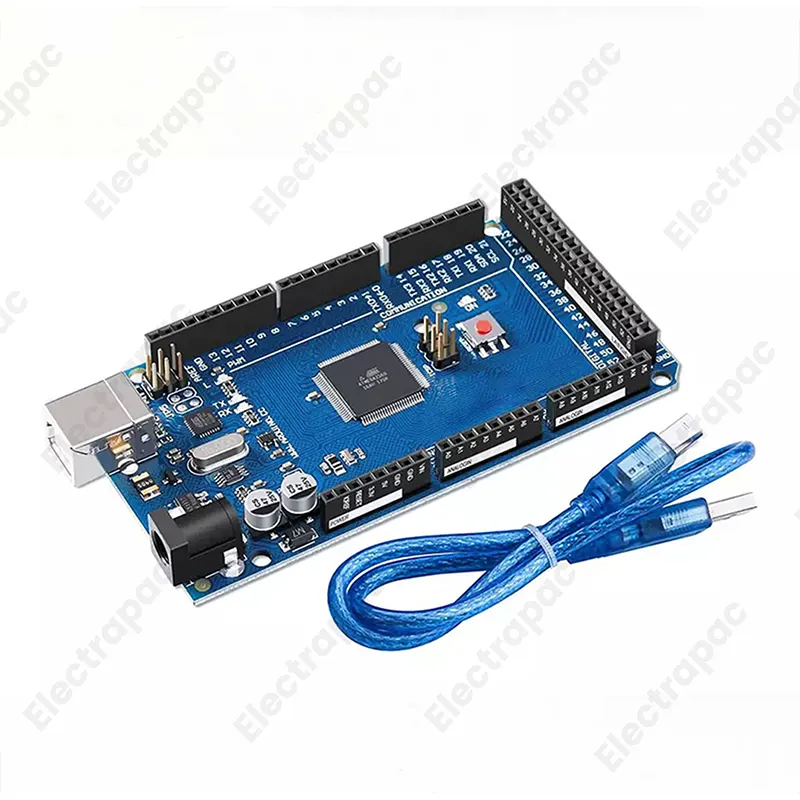
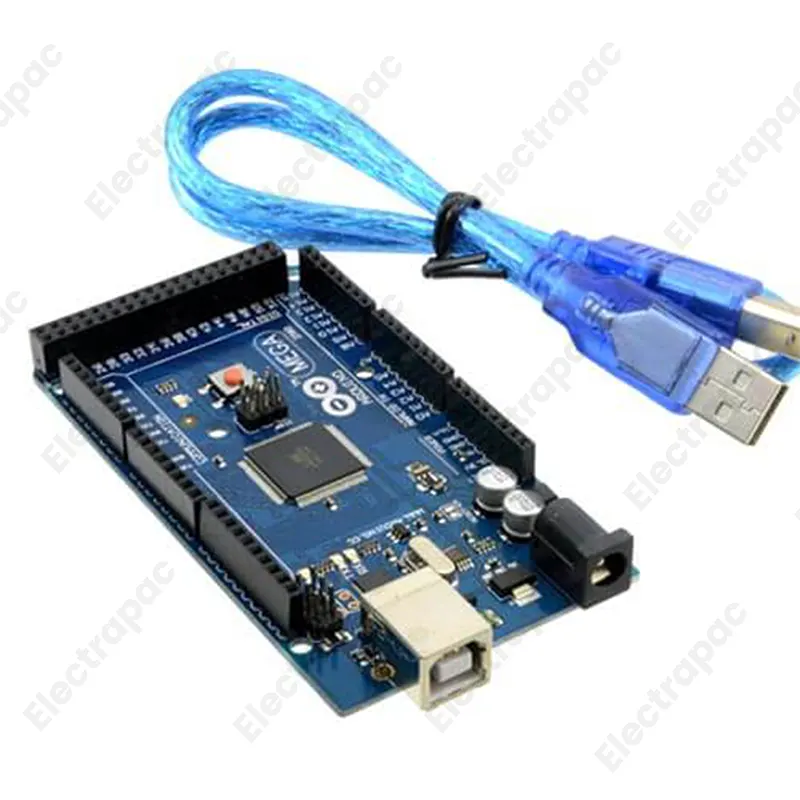
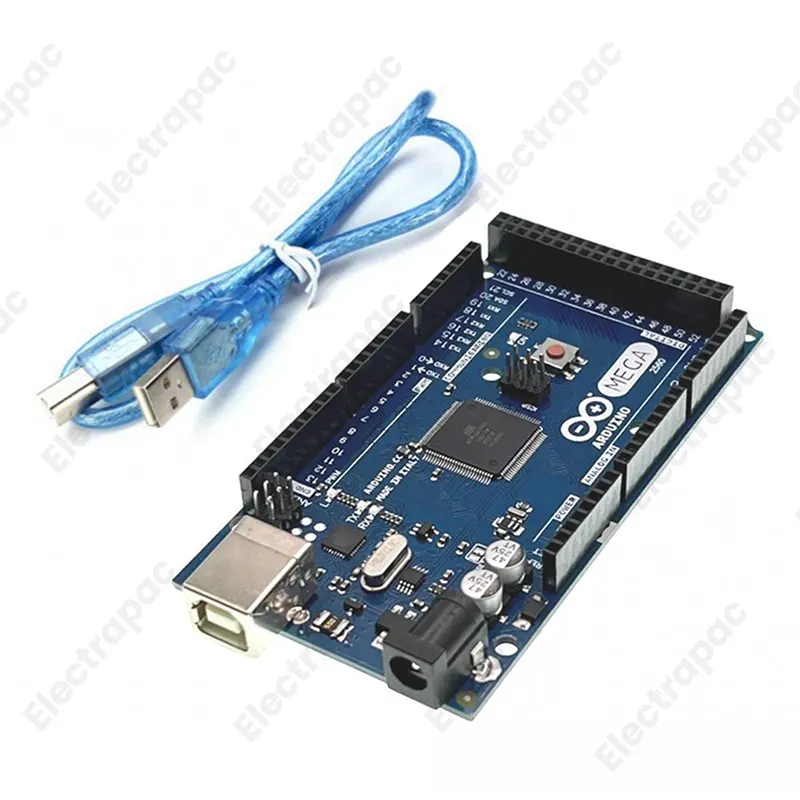
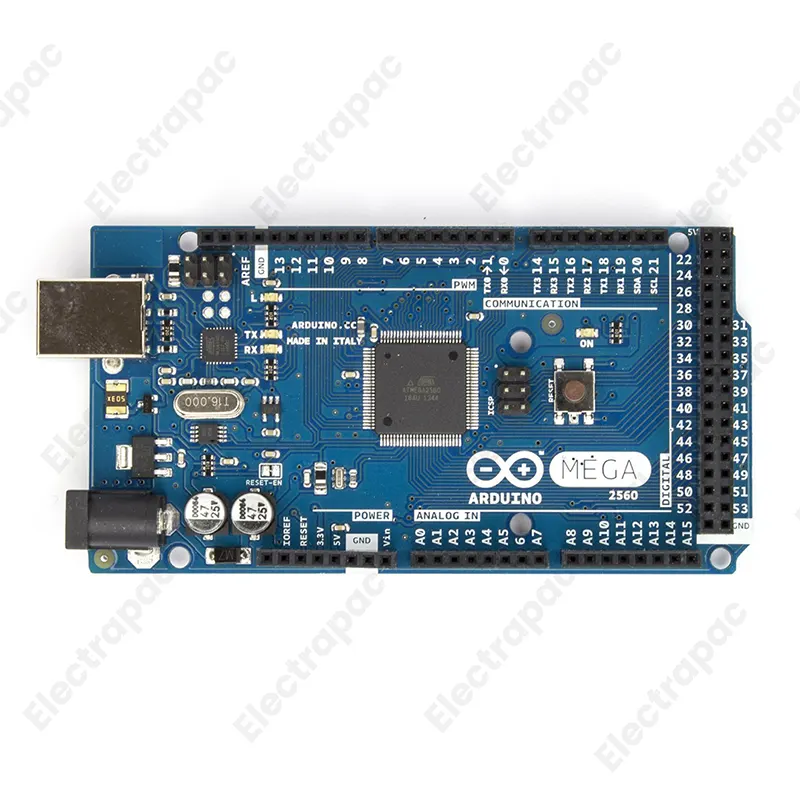
The Arduino Mega 2560 R3 is designed for those who have outgrown the limitations of standard boards. With a massive increase in memory and I/O pins, it is the industry standard for 3D printers (like RAMPS setups) and complex robotics. Read more
The Mega 2560 R3 is a microcontroller board based on the ATmega2560. It is designed for projects that require a massive amount of I/O (input/output). With 54 digital pins and a significantly larger memory bank, it allows you to run much larger code sketches and connect dozens of sensors, motors, and displays simultaneously without running out of space.
Massive Connectivity: With 54 digital pins and 16 analog inputs, you can control entire robotic swarms or complex automation systems from a single board.
Quad-Hardware Serial: Unlike the Uno, the Mega features 4 hardware serial ports (UARTs).
Increased Memory: With 256 KB of Flash and 8 KB of SRAM, the Mega can handle heavy libraries (like those for color TFT touchscreens or complex SD card logging) that would crash smaller boards.
Shield Compatibility: The Mega is compatible with most shields designed for the Uno, but it also supports specialized Mega-only shields, such as the RAMPS 1.4 for 3D printers.
Stable Power Management: Features a dedicated voltage regulator and a resettable polyfuse to protect your computer's USB ports from shorts or overcurrent.
To begin your journey with
Connect: Use the included high-quality USB cable to connect the Mega to your PC.
Driver Setup: The R3 version uses the ATmega16U2 chip, which typically auto-installs drivers on Windows 10/11 and Mac.
IDE Selection: Open the Arduino IDE, go to Tools > Board, and select "Arduino Mega or Mega 2560".
Powering: While USB is fine for programming, for high-power motor projects, we recommend using a 12V 2A DC Adapter plugged into the barrel jack.
3D Printers: The "brain" behind most DIY 3D printers (Marlin firmware).
CNC Machines: Precise control over multiple stepper motors and limit switches.
Home Automation Hubs: Manage an entire house's worth of sensors, relays, and displays.
Complex Robotics: Perfect for hexapod walkers or robotic arms with 10+ servos.
We supply the Mega 2560 R3 with the ATmega16U2 USB chip (not the slower CH340) for the most reliable connection and faster upload speeds. Every board from
| Specifications | Descriptions |
|---|---|
| Microcontroller | ATmega2560 |
| Operating Voltage | 5V |
| Input Voltage (recommended) | 7–12V |
| Input Voltage (limit) | 6–20V |
| Digital I/O Pins | 54 (15 provide PWM output) |
| Analog Input Pins | 16 |
| DC Current per I/O Pin | 20 mA |
| DC Current for 3.3V Pin | 50 mA |
| Flash Memory | 256 KB (8 KB used by bootloader) |
| SRAM | 8 KB |
| EEPROM | 4 KB |
| Clock Speed | 16 MHz |
| LED_BUILTIN | 13 |
| Length | 101.52 mm |
| Width | 53.3 mm |
| Weight | 37 g |
| Package | 1 x 1 Arduino MEGA with Cable |

Subscribe to our newsletter and get early access to new arrivals, tech trends, and exclusive unboxing reviews from Electrapac.?