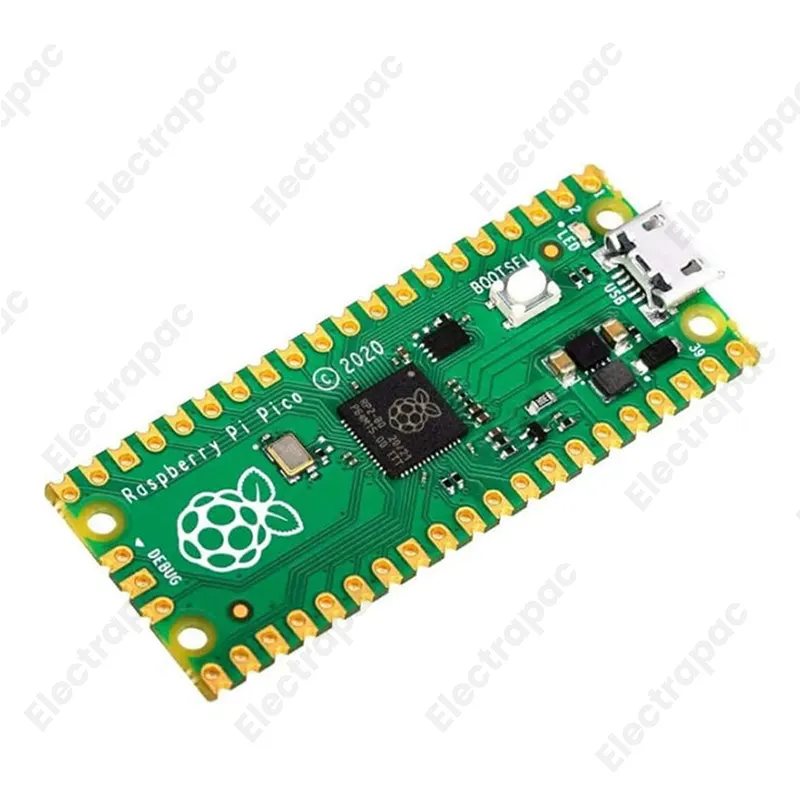
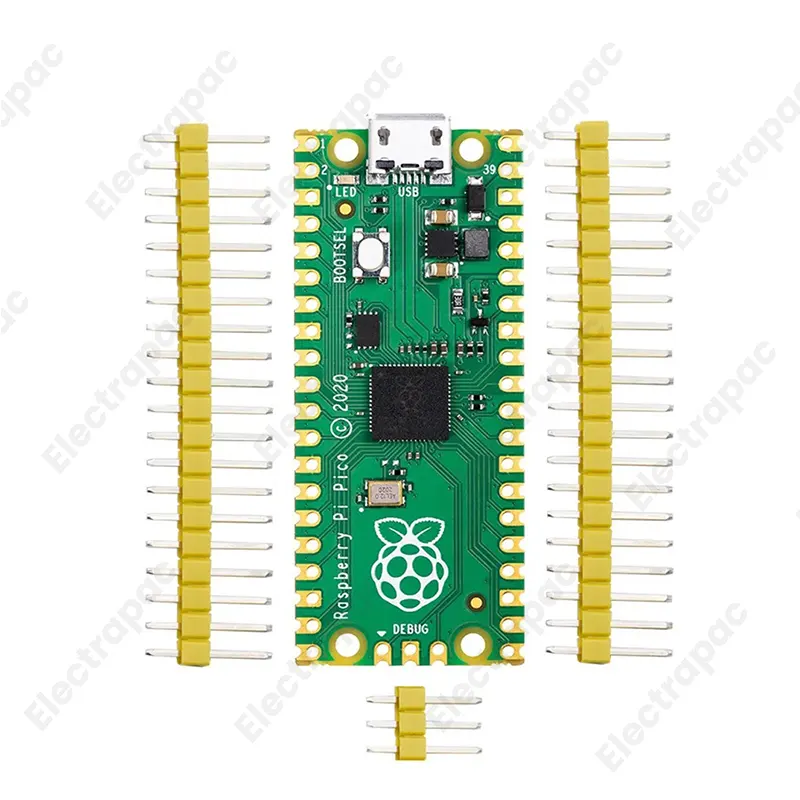
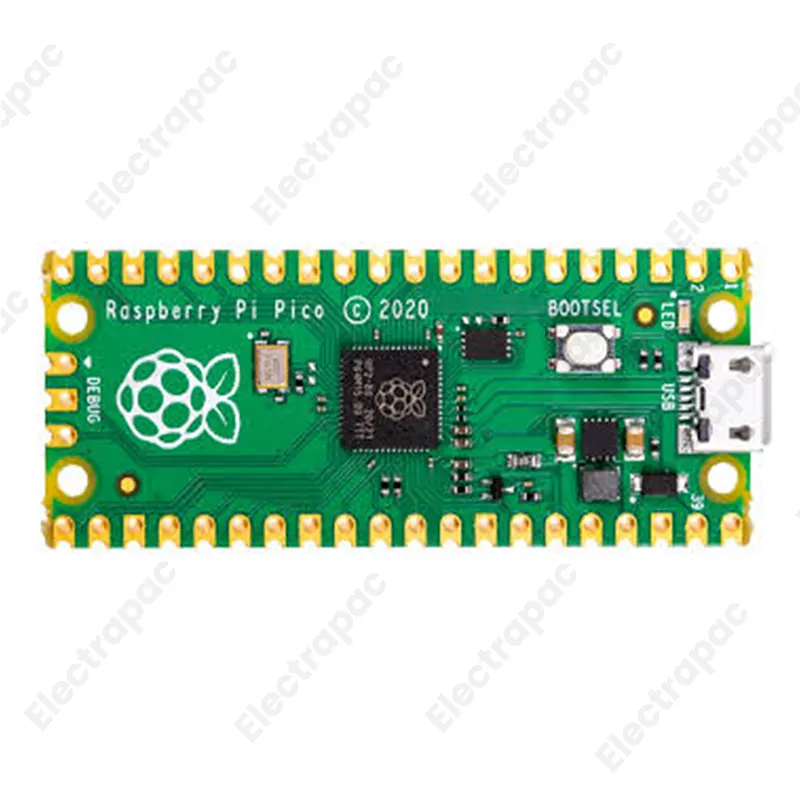
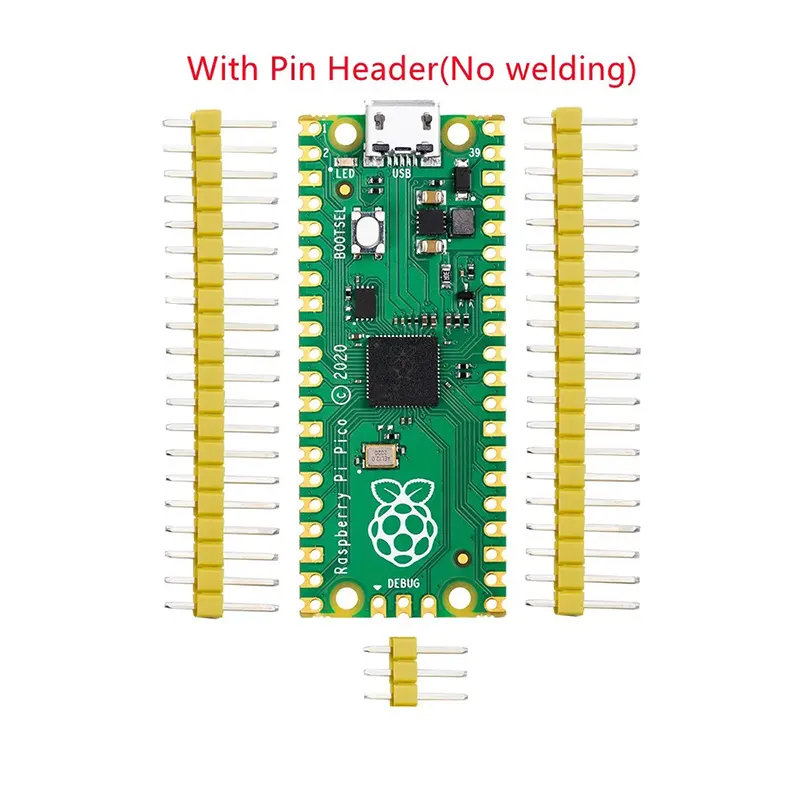
The Raspberry Pi Pico is a groundbreaking microcontroller board designed by the Raspberry Pi Foundation to be both powerful and incredibly affordable. At its heart lies the RP2040 chip, featuring a dual-core ARM Cortex-M0+ processor clocked at 133MHz, offering plenty of horsepower for everything from simple LED displays to complex robotic control. Read more
The Raspberry Pi Pico is a high-performance, low-cost microcontroller board built around the RP2040—the first silicon chip designed in-house by the Raspberry Pi Foundation.
Unlike the traditional Raspberry Pi boards, the Pico is not a Linux computer; it is a microcontroller.
Dual-Core Processing: The dual Cortex-M0+ cores allow you to run two separate tasks simultaneously—for example, one core can handle complex sensor math while the other manages a fast-scrolling display.
Programmable I/O (PIO): This is the "secret sauce" of the Pico. PIO allows you to create custom hardware interfaces (like VGA output or unique serial protocols) that run independently of the main CPU.
Flexible Programming: Supports MicroPython and CircuitPython for rapid prototyping, or C/C++ for professional-grade performance.
Castellated Holes: The edges of the PCB are notched, allowing you to solder the Pico directly onto another PCB as a surface-mount component for your custom Electrapac designs.
Ultra-Low Power: It features a high-efficiency buck-boost converter, allowing it to run reliably from a single Li-ion battery or even AA cells.
Getting started with your Electrapac Raspberry Pi Pico is straightforward:
Connecting: Plug the Pico into your computer via a Micro-USB cable while holding the BOOTSEL button. It will appear as a USB mass storage drive.
Coding: Drag and drop your firmware (like the MicroPython .uf2 file) onto the drive, and the Pico will reboot and start running your code instantly.
Expansion: Use the 26 GPIO pins to connect everything from LED matrices to I2C sensors.
Internet of Things (IoT): Use it as the brain for smart home sensors and data loggers.
Robotics: Dual-core power is perfect for processing sensor data and controlling multiple servos in real-time.
Digital Displays: Drive OLEDs, TFT screens, and NeoPixel strips with ease.
USB Peripherals: Create custom macro pads, game controllers, or MIDI devices.
Machine Learning: Run "TinyML" models for gesture recognition or voice detection.
We supply the Genuine Raspberry Pi Pico to ensure you get the full 2MB of flash and reliable RP2040 performance. Visit us at
| Specifications | Descriptions |
|---|---|
| Input Voltage | 1.8V – 5.5V DC (can be powered via Micro USB or VSYS pin) |
| Programming | Support for C/C++ and MicroPython |
| Microcontroller | RP2040 (Designed by Raspberry Pi in the UK) |
| Processor | Dual-core ARM Cortex-M0+ |
| Clock Speed | Flexible clock running up to 133 MHz |
| Memory | * 264 KB on-chip SRAM & 2 MB on-board QSPI Flash memory |
| GPIO Pins | 26 multi-function General Purpose I/O pins (3.3V logic) |
| Analog Inputs | 3 × 12-bit ADC channels |
| Operating Temperature | -20°C to +85°C |
| Package | 1 x 1 Raspberry Pi Pico |

Subscribe to our newsletter and get early access to new arrivals, tech trends, and exclusive unboxing reviews from Electrapac.?