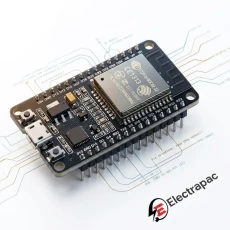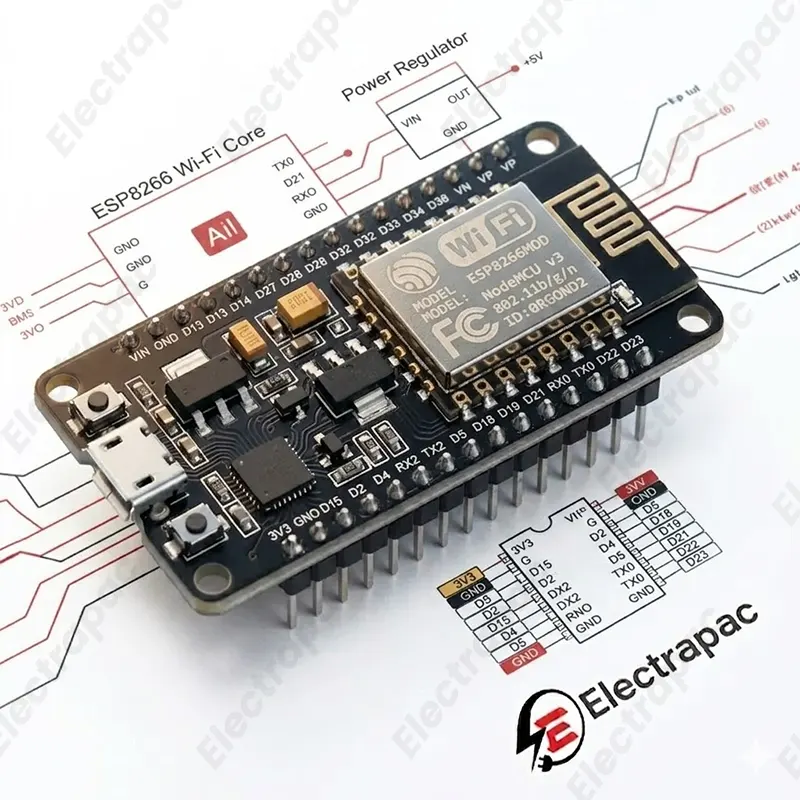
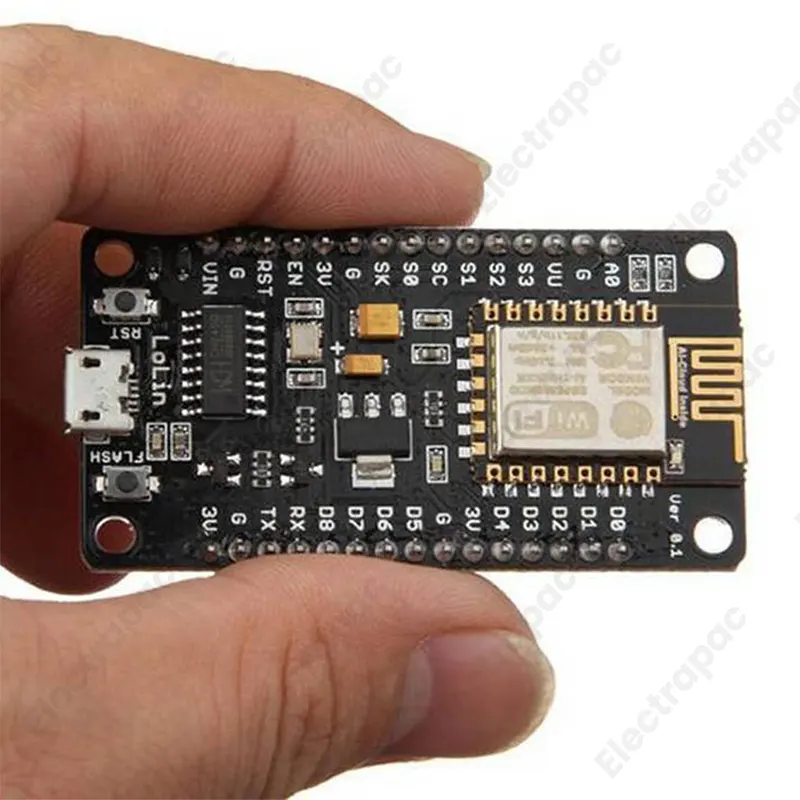
Plug-and-Play Simplicity: Integrated CH340G USB-to-TTL chip allows you to plug the board directly into your computer for instant programming—no external programmers needed, Built-in WiFi: Based on the powerful ESP-12E module, allowing your projects to connect to the internet, host a web server, or join a local network, Arduino IDE Compatible: Seamlessly works with the Arduino environment, making thousands of free libraries and tutorials available to you. Read more
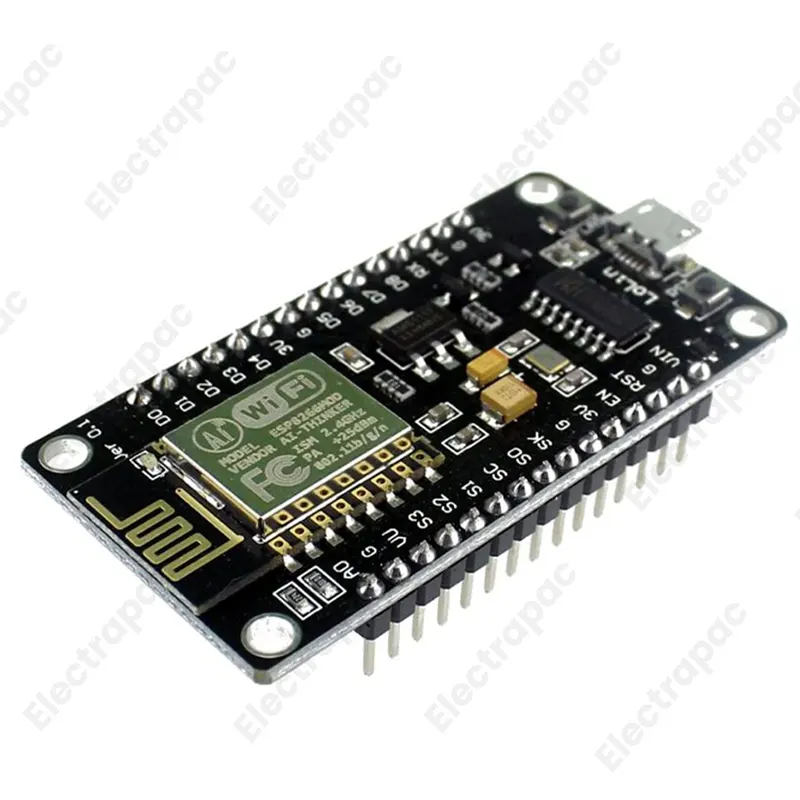
The NodeMCU V3 ESP8266 (CH340) is the world’s most popular open-source development board for Wi-Fi-based IoT projects. At Electrapac, we recommend this "V3" (Lolin) version for its larger, more stable footprint, which makes it perfect for secure mounting and easier access to GPIO pins during prototyping.
The NodeMCU V3 combines the powerful ESP-12E Wi-Fi module with the CH340G USB-to-Serial converter, allowing you to program it directly via a standard Micro-USB cable.
Integrated Wi-Fi Antenna: Features a high-quality PCB trace antenna for reliable wireless communication throughout your home or office.
Breadboard Friendly (Lolin V3): While wider than the V2, the V3 provides better mechanical stability and clearly labeled pins on both the top and bottom of the board.
Plug-and-Play Coding: Fully compatible with the Arduino IDE, NodeMCU Lua, and MicroPython.
Onboard Logic: Includes integrated Reset and Flash buttons, plus a programmable LED (connected to GPIO2) for quick status indications.
IoT Ready: Native support for protocols like HTTP, MQTT, and WebSockets, making it the perfect choice for connecting to platforms like Blynk, Adafruit IO, or Home Assistant.
When building your project with parts from
3.3V Logic: The ESP8266 pins are not 5V tolerant. Connecting a 5V signal directly to a data pin can damage the board.
Powering via Vin: You can power the board using a 5V–9V DC power supply via the Vin pin; the onboard regulator will safely convert it to 3.3V.
The ADC Pin (A0): Unlike the raw ESP8266 chip, the NodeMCU board includes a resistor divider, allowing you to read analog voltages from 0V to 3.3V.
Smart Home Automation: Control lights, fans, and appliances via a custom smartphone app or web dashboard.
Environmental Monitoring: Build a Wi-Fi weather station that uploads temperature and humidity data to the cloud.
Wireless Data Logging: Monitor industrial sensors remotely without the need for long, expensive cables.
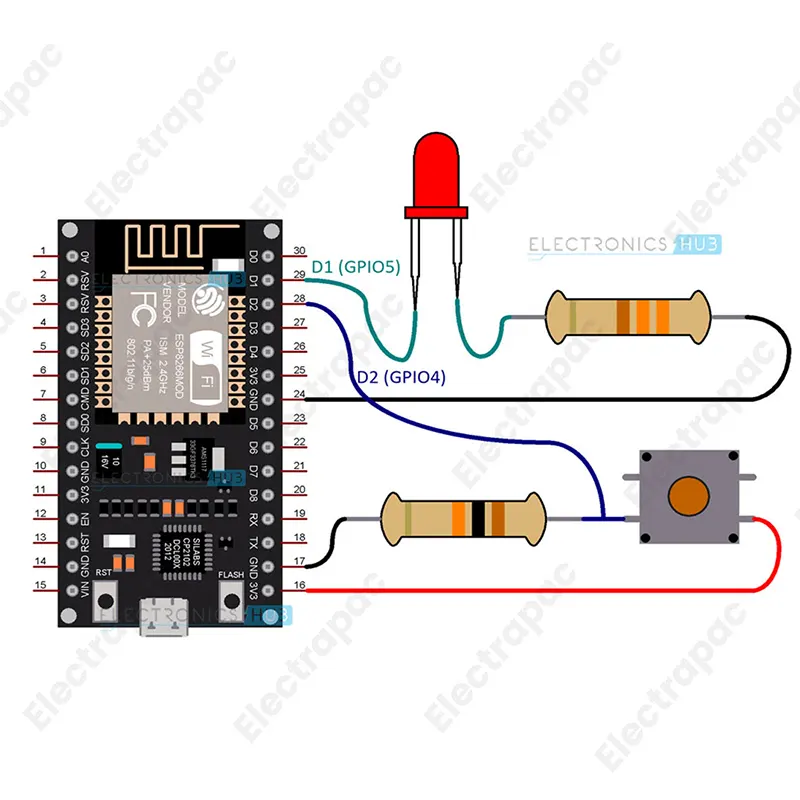
Web Servers: Host a simple HTML page directly on the ESP8266 to toggle GPIO pins from any browser on your network.
We source our NodeMCU V3 Boards with original ESP-12E modules and high-quality voltage regulators to prevent "brownouts" during Wi-Fi transmission. At
| Specifications | Descriptions |
|---|---|
| Wireless Standard | 802.11 b/g/n |
| Operating Modes | STA / AP / STA + AP |
| Built-in TCP/IP Protocol Stack | Supports multiple TCP Client connections (5 MAX) |
| Ports | D0 ~ D8, SD1 ~ SD3 (GPIO, PWM, IIC, etc.), AD0 (1 channel ADC) |
| Power Input | 4.5V ~ 9V (10V MAX), USB-powered |
| Continuous transmission | ≈70mA (200mA MAX) Standby: <200uA |
| Standby Current | <200uA |
| Transfer Rate | 110-460800bps |
| Communication Interface | UART / GPIO data communication |
| Remote Firmware Upgrade | OTA |
| Working Temperature | -40°C ~ +125°C |
| Drive Type | Dual high-power H-bridge driver |
| Package | 1 x NodeMcu V3 ESP8266 WIFI Module Development Board with CH340 |

Subscribe to our newsletter and get early access to new arrivals, tech trends, and exclusive unboxing reviews from Electrapac.?