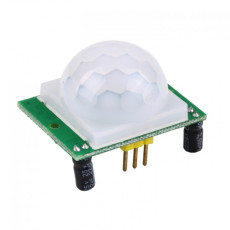
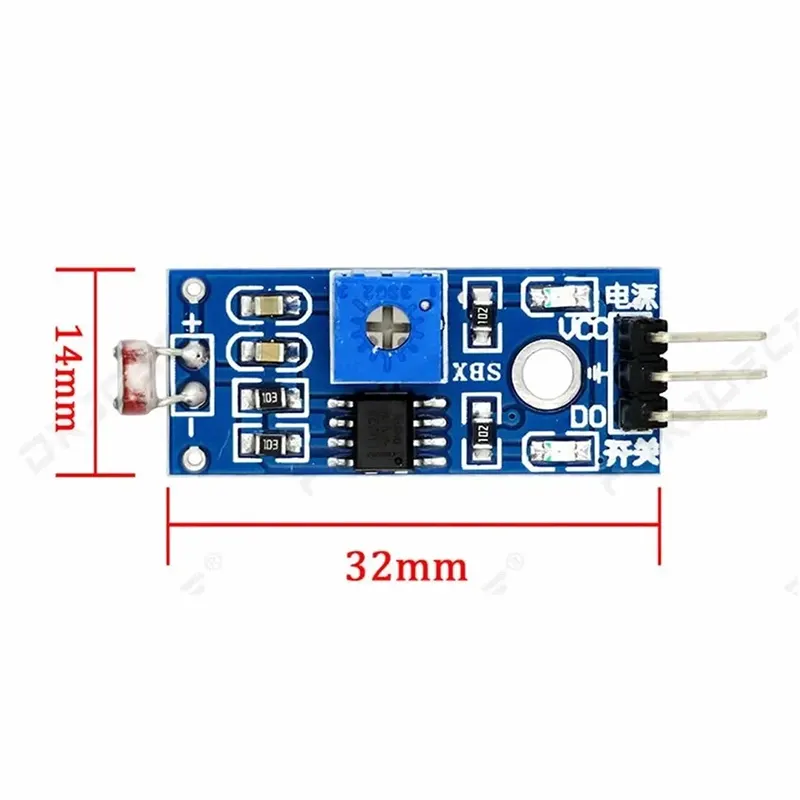
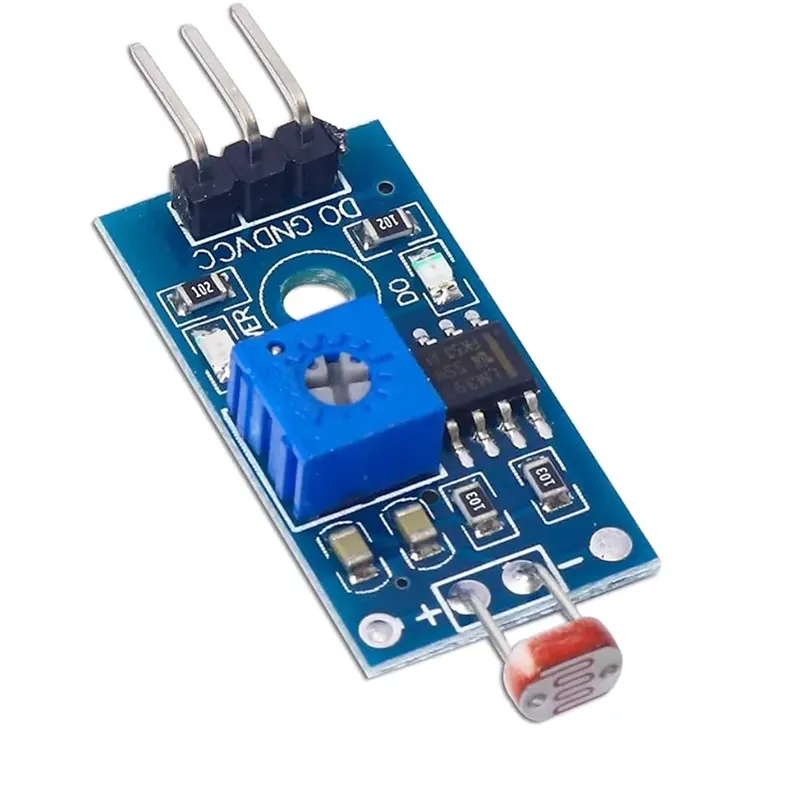
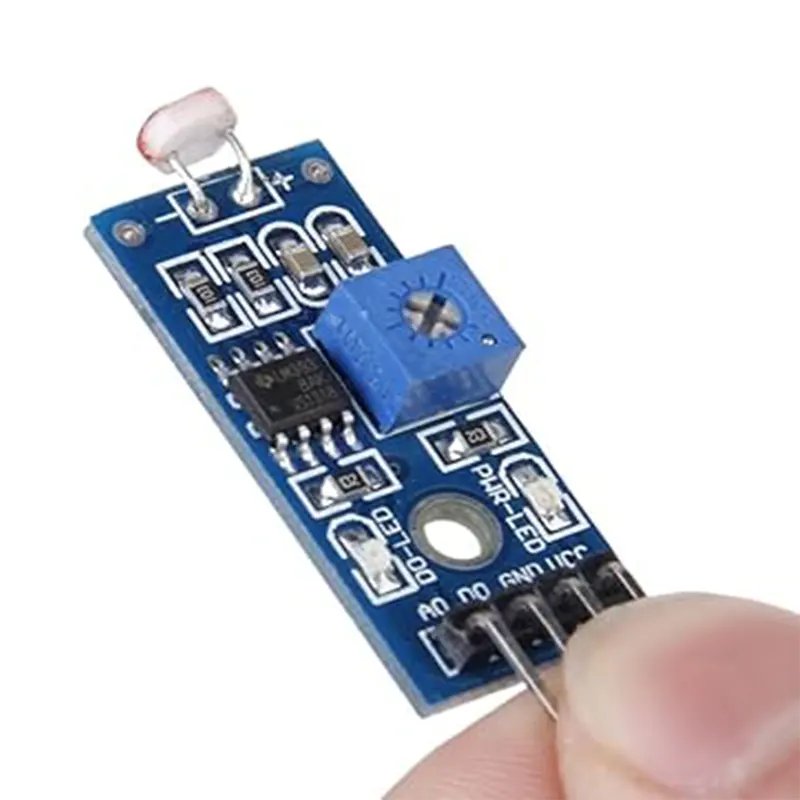
Automate your lighting and save energy with the Light Detection LDR Sensor Module, available now at the best price in Bangladesh from ElectraPac. This photosensitive module is the standard component for Dhaka’s electronics students and DIY enthusiasts building automatic "Day/Night" switches Read more
The Light Detection Photosensitive LDR Sensor Module is an essential light-sensing component designed to detect the intensity of ambient light. At Electrapac, we recommend this module for makers and students in Bangladesh who are building automatic street lights, solar tracking systems, or day/night security alarms with Arduino and Raspberry Pi.
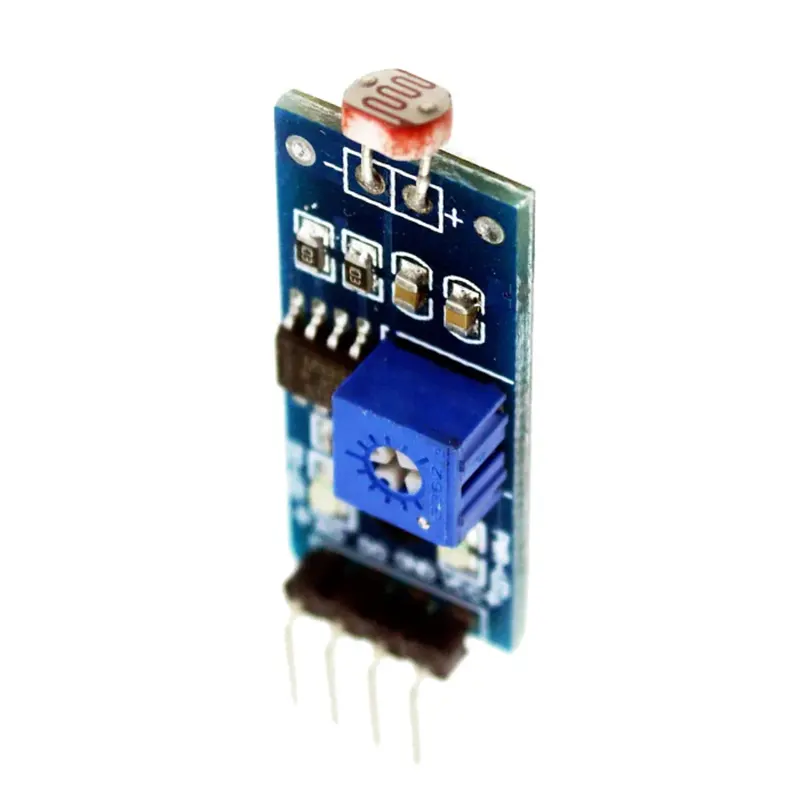
Product OverviewThe module is based on a Photoresistor (LDR), which changes its internal resistance based on the amount of light hitting its surface. In dark conditions, the resistance is very high; as light intensity increases, the resistance drops. This module features an on-board LM393 comparator to provide a clean digital signal and a variable analog output, making it much easier to use than a bare LDR component.
Dual Signal Output: * Digital (D0): Acts as a switch (HIGH/LOW) for simple "is it dark yet?" applications.
Analog (A0): Provides a precise voltage reading (0V to 5V) to measure exactly how bright the environment is.
Adjustable Sensitivity: Includes a multi-turn potentiometer. You can fine-tune the "threshold" so the digital trigger only activates at a specific darkness level.
Plug-and-Play Design: Features standard 4-pin headers that work perfectly with breadboards and DuPont jumper wires.
Status LEDs: Equipped with a Power LED and a Signal LED that lights up when the light intensity reaches your set threshold, making calibration effortless.
Compact Mounting: Includes a pre-drilled M3 mounting hole, allowing you to easily screw the sensor onto your robot chassis or a weatherproof outdoor enclosure.
Setting up the Electrapac LDR module for your first project is straightforward:
VCC: Connect to 3.3V or 5V.
GND: Connect to Ground.
D0 / A0: Connect to your desired microcontroller pins.
Calibration: Place the sensor in the "Daylight" condition you want to detect. Turn the potentiometer until the signal LED just turns on. Now, cover the LDR with your finger; the LED should turn off, signaling a "Night" condition.
Primary ApplicationsPro-Tip: If you are building an Automatic Street Light, use the Digital Output to trigger a 5V Relay Module. This allows your Arduino to safely turn on a 220V AC bulb when the sun goes down!
Automatic Night Lights: Turning on household or garden lights automatically at dusk.
Solar Trackers: Using two LDR modules to help a solar panel follow the sun for maximum efficiency.
Intrusion Alarms: Detecting a beam of light being broken (when paired with a laser or LED).
Smart Curtains: Automatically closing window blinds when the afternoon sun becomes too bright.
Camera Exposure Meters: Helping DIY camera projects adjust their settings based on ambient brightness.
We source our LDR Sensor Modules with high-sensitivity photoresistors to ensure they respond accurately to the specific light levels found in both indoor and outdoor environments. Visit us at www.electrapac.com for the sensing components that help your projects react to the world around them.
| Specifications | Descriptions |
|---|---|
| Producte Name | LDR Sensor Module |
| Operating Voltage | 3.3V to 5V DC |
| Output Type | Digital (D0) & Analog (A0) |
| Comparator Chip | LM393 (High Stability) |
| Spectral Peak | 540nm (Visible Light) |
| Current Draw | ~15mA |
| Dimensions | ~32mm x 14mm |
| Package | 1 x 1 LDR Sensor Module |

Subscribe to our newsletter and get early access to new arrivals, tech trends, and exclusive unboxing reviews from Electrapac.?